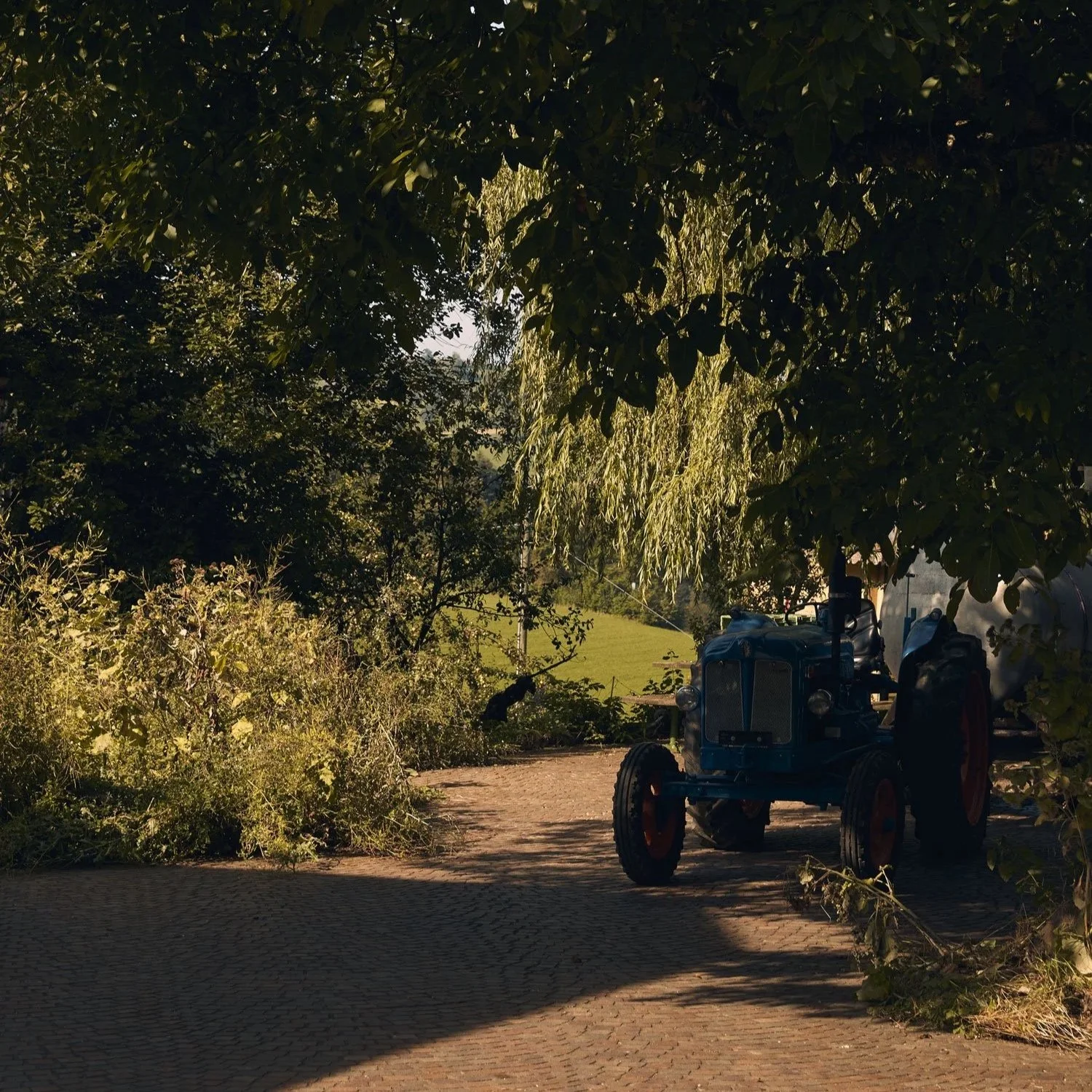
OUR RAW MATERIALS
Good materials begin with good farming.
For us, leather doesn't start in the tannery, but in the pasture. The way animals are raised and agriculture is practiced shapes much more than just the quality of a hide. It influences soils, waterways, biodiversity, landscapes, and ultimately the future of our food.
That is why we do not select our raw materials based on availability or price, but rather on their origin. We work exclusively with Swiss farms that share our values and take responsibility for animals, nature, and future generations.
We do not see leather as an end in itself, but as part of a cycle: as long as animals are raised for food production, hides are generated—a high-quality byproduct that should not go to waste. Leaving them unused while simultaneously producing new materials from fossil raw materials makes neither ecological nor economic sense to us. Our goal is to use existing resources as fully and appreciatively as possible.

OUR REQUIREMENTS
Origin and husbandry are non-negotiable.
Our raw materials come exclusively from Swiss suckler cow farms. This ensures a natural herd structure where calves grow up with their mothers and animals have access to pasture and movement. We work with farms that are either Bio Suisse or Demeter certified, or that demonstrably practice regenerative agriculture even without certification. All three paths pursue the same goal: to strengthen soil, water, and biodiversity in the long term.
Upon request, we provide documentation regarding origin, animal husbandry, and farm management.
01. Origin
All our raw materials come from Switzerland.
02. Animal husbandry
Our hides come exclusively from suckler cow husbandry.
03. Farming
The farm is Bio Suisse certified, operates according to Demeter standards, or practices regenerative agriculture – even without a formal certificate.
01. ORIGIN
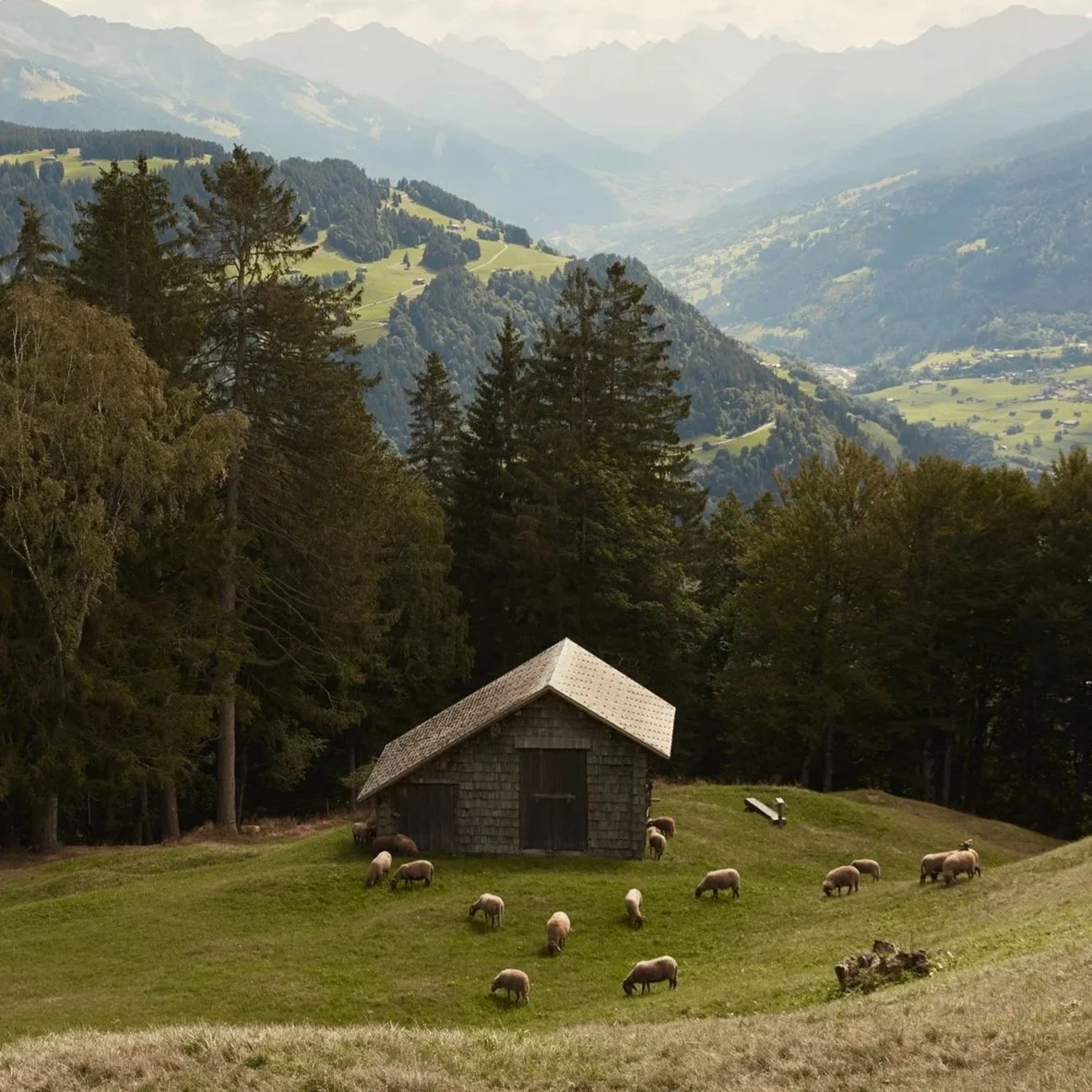
Everything from Switzerland
All of our raw materials come from Switzerland. Short transport routes, strict legal requirements, and close cooperation with farms ensure transparency along the entire value chain.
At the same time, value creation remains where it is generated – in the regions where the animals lived and people take daily responsibility for their agriculture.
02. ANIMALS AND ANIMAL HUSBANDRY
A life as it should be
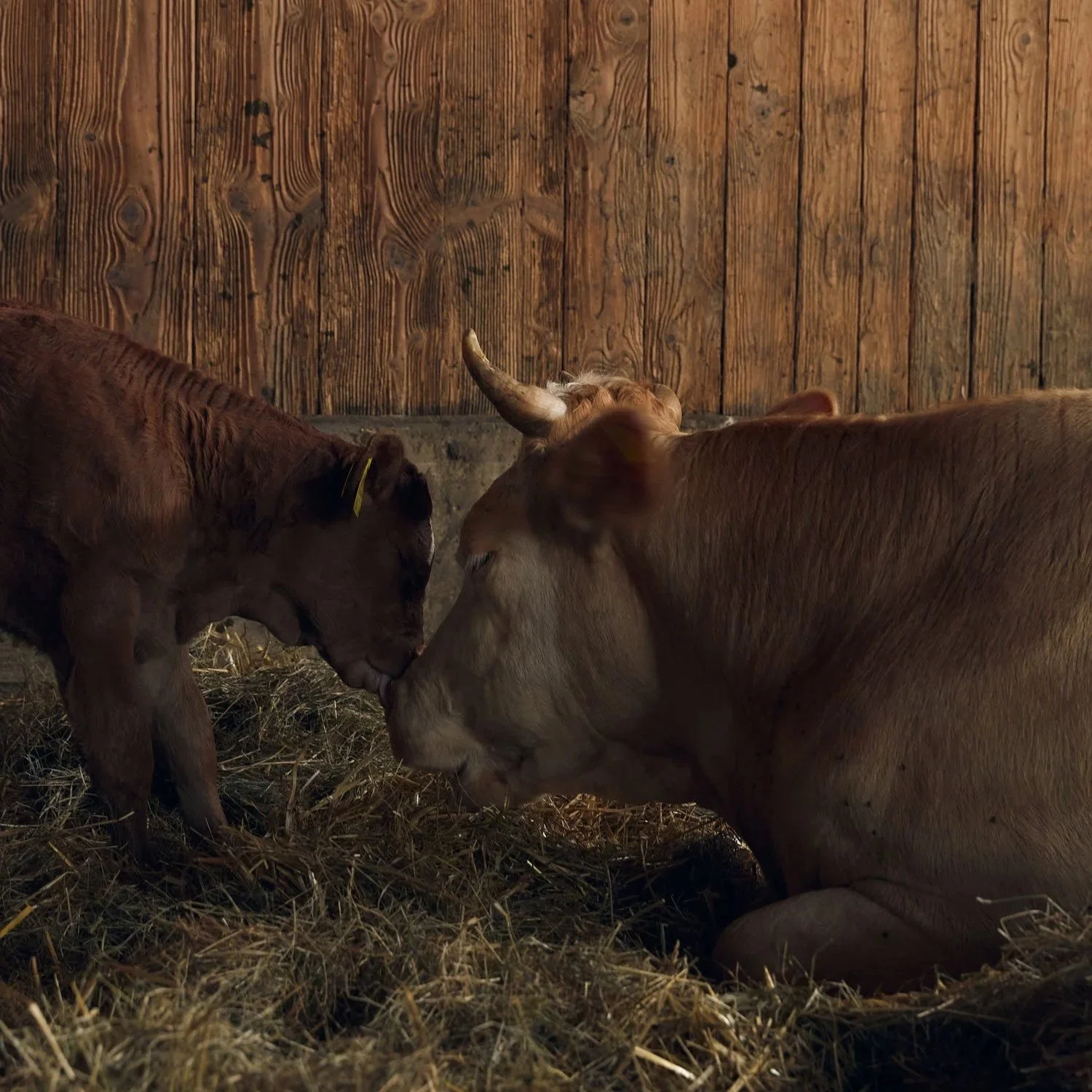
Cattle, sheep, and goats can do something we humans cannot: they turn grass into high-quality food. In Switzerland in particular, a large portion of agricultural land consists of meadows and pastures that are not suitable for arable farming. Ruminants make good use of these areas while simultaneously preserving our cultural landscapes.
A core principle applies to us: feed no food. Ruminants should primarily utilize what is not directly edible for humans, especially grass, hay, and other plant biomass, ensuring they do not compete with human nutrition. Just as crucial as this role is how the animals are kept for us. Our cattle hides come exclusively from suckler cow husbandry – a farming method that enables a natural herd structure where calves grow up with their mothers and have access to movement and pasture areas.
03. FARMING
Bio Suisse, Demeter, regenerative: Three paths, one goal
From Bio Suisse and Demeter to regenerative practices: every approach has its own logic, yet all share a common goal. They differ in their guidelines: shaping agriculture to sustainably strengthen soil, water, biodiversity, and natural cycles over the long term.
Bio Suisse
Bio Suisse is one of the strictest agricultural standards worldwide.
-
Not every organic label stands for the same thing. Bio Suisse is one of the strictest agricultural standards in the world and goes far beyond the requirements of the EU organic regulation or other international organic standards in many areas.
Site-appropriate livestock farming is particularly important to us. Ruminants are fed primarily on grass, hay, and silage - feed that grows in Swiss meadows and does not compete with human food production. Concentrated feed is strictly limited (maximum 5%). At the same time, high standards apply to biodiversity, crop protection, animal husbandry, and closed nutrient cycles. These principles promote healthy soils, diverse landscapes, and long-term sustainable agriculture.
Demeter
Biodynamic agriculture, following the Demeter standard, views the farm as a living whole.
-
Soil, plants, animals, and humans are interconnected and form a natural cycle. While Bio Suisse defines clear ecological and animal welfare standards, Demeter goes a step further by viewing the entire farm as a cohesive system. The goal is not only to conserve resources, but to build the farm's natural fertility and resilience over the long term.
Closed cycles, a high proportion of farm-grown feed, the development of living soils, and a mindful approach to natural processes are particularly important. Animals are a central component of the farm system and contribute to maintaining soil fertility. Demeter thus stands for agriculture that not only operates sustainably, but also actively contributes to the health of the entire ecosystem.
Regenerative Agriculture
Not a label, but an approach that actively strengthens soils, water, and biodiversity.
-
Regenerative agriculture is neither a label nor a certification. Rather, it describes an approach that views agriculture as part of living ecosystems. The central idea is: How can agriculture not only cause less harm, but actively help to restore soil, water, biodiversity, and natural cycles?
Most Swiss organic farms already use management practices that can have a regenerative effect. These include building healthy and living soils, promoting biodiversity, protecting water and nutrient cycles, and implementing site-appropriate management.
For us, regeneration therefore means more than just storing carbon in the soil. Healthy soil retains water, nourishes plants, provides a habitat for billions of microorganisms, and forms the foundation for resilient ecosystems. Soil fertility, biodiversity, water management, animal welfare, and regional cycles must always be considered together.
These include, for example:
the development of healthy and vibrant soils
diverse plant populations
the promotion of biodiversity
site-adapted grazing systems
nutrient cycles that are as closed-loop as possible
better water retention and a stable water cycle
Regenerative agriculture therefore cannot simply be translated into a uniform checklist or certificate. Every farm is different: climate, soil, topography, and livestock vary – just like the appropriate solutions. What makes sense in the Alps does not automatically work in the Swiss Plateau or the Jura.
For us, regenerative agriculture is not in opposition to organic or Demeter standards. Many principles overlap. However, the primary focus is always on strengthening the natural systems upon which agriculture depends over the long term and promoting their capacity for renewal.
OUR BOUNDARIES
What we exclude
Not every form of animal husbandry meets our standards. We do not source raw materials from industrial factory farming or from systems that are incompatible with our vision of animal welfare, natural cycles, and sustainable agriculture.
Swiss agriculture is facing major challenges while simultaneously undergoing transformation. Particularly in dairy farming, there are various systems that do not all align with our values. That is why we work exclusively with farms that focus on suckler cow husbandry and orient their animal care toward natural cycles, animal welfare, and long-term soil health.
OUR COMMITMENT
Sustainable agriculture is not a state that you reach just once.
It is constantly evolving: through new insights, collaboration with farmers, and a responsible approach to the natural conditions of each individual location. We, too, are continuously learning.
Therefore, we do not view our criteria as a rigid set of rules, but rather as the expression of a clear stance: we want to create materials that respect their origins – from the soil and the animal to the finished product.