WHY CORII
Leather belongs in the loop. Not the landfill.
Today, leather production is often part of global, opaque supply chains, involving toxic chemicals, a lack of worker protection, and untreated wastewater entering rivers and soil. At the same time, hundreds of thousands of hides are disposed of in Switzerland every year, while petroleum-based synthetic leather products dominate the market. For us, this is a contradiction. Leather is made from the hide of an animal that was slaughtered for meat production. To utilize this hide instead of discarding it is not a compromise, but a logical consequence.
Leather connects agriculture, food, and design. When purchasing leather, one makes decisions about materials, supply chains, and agricultural practices. We aim to make this connection visible again. We also demonstrate an alternative approach: regionally produced, vegetable-tanned, and transparent from the farm to the finished material.
OUR STANCE
Nose to tail – the whole animal counts!
We eat too much meat – that is a fact. But the answer is not to ban animals from agriculture. Healthy soils need animals. Not in large numbers, but in cycles – as part of an agriculture that regenerates instead of depleting.
The problem is not the animal. It's the system.
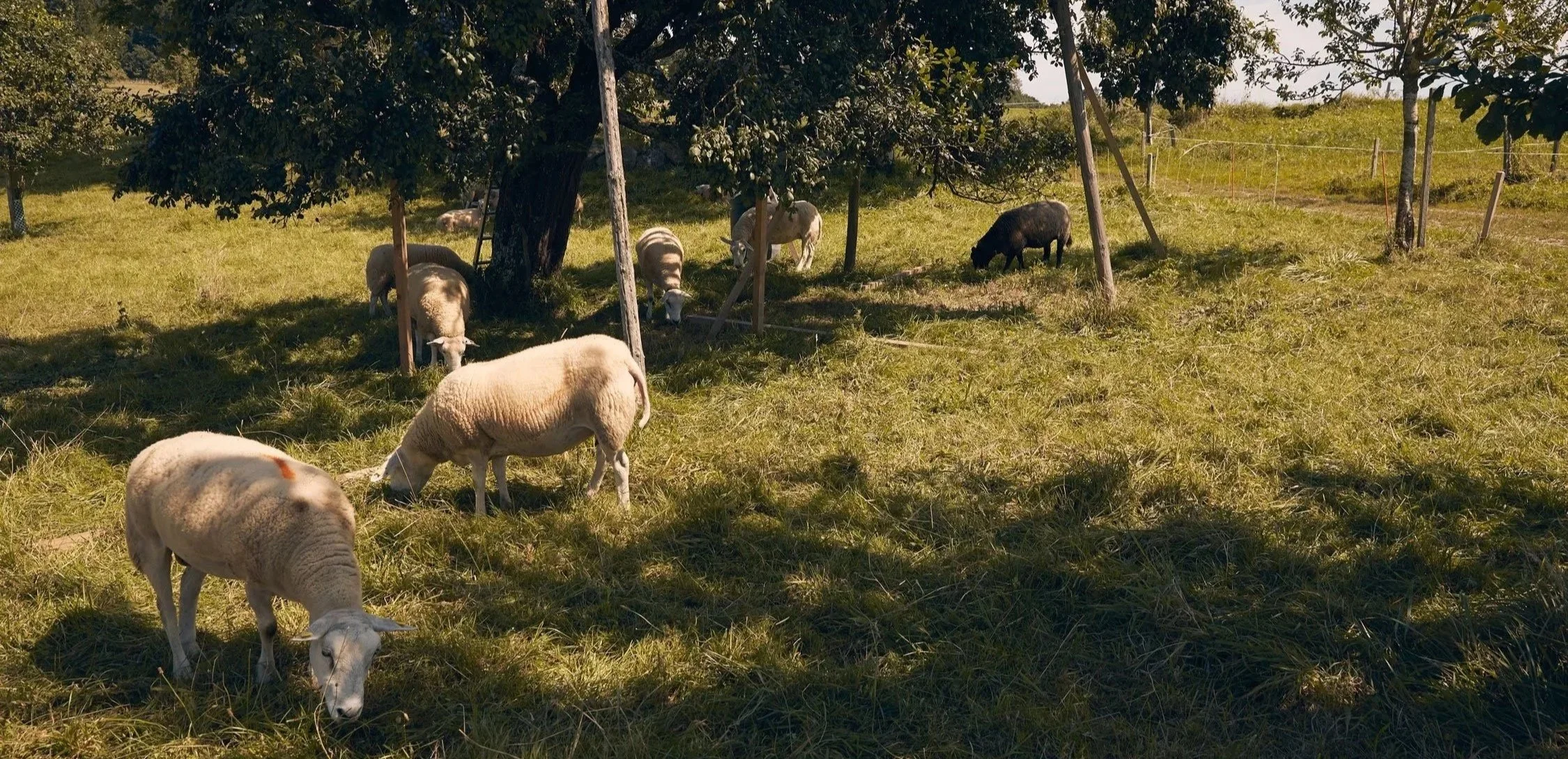
Leather constitutes about 8% of an animal's weight – yet less than 1% of its economic value. Consequently, it is often discarded, despite being a valuable byproduct. We collaborate with farmers who raise their animals humanely, enabling them to make more holistic use of the animal. Nose to tail – not as a trend, but as a principle.
Our leathers are exclusively produced from the hides of animals from organic, biodynamic, or regenerative agriculture – and from hunting in the surrounding forest. The tanning process is carried out regionally, using natural extracts, free from heavy metals and toxic chemicals.
ABOUT US
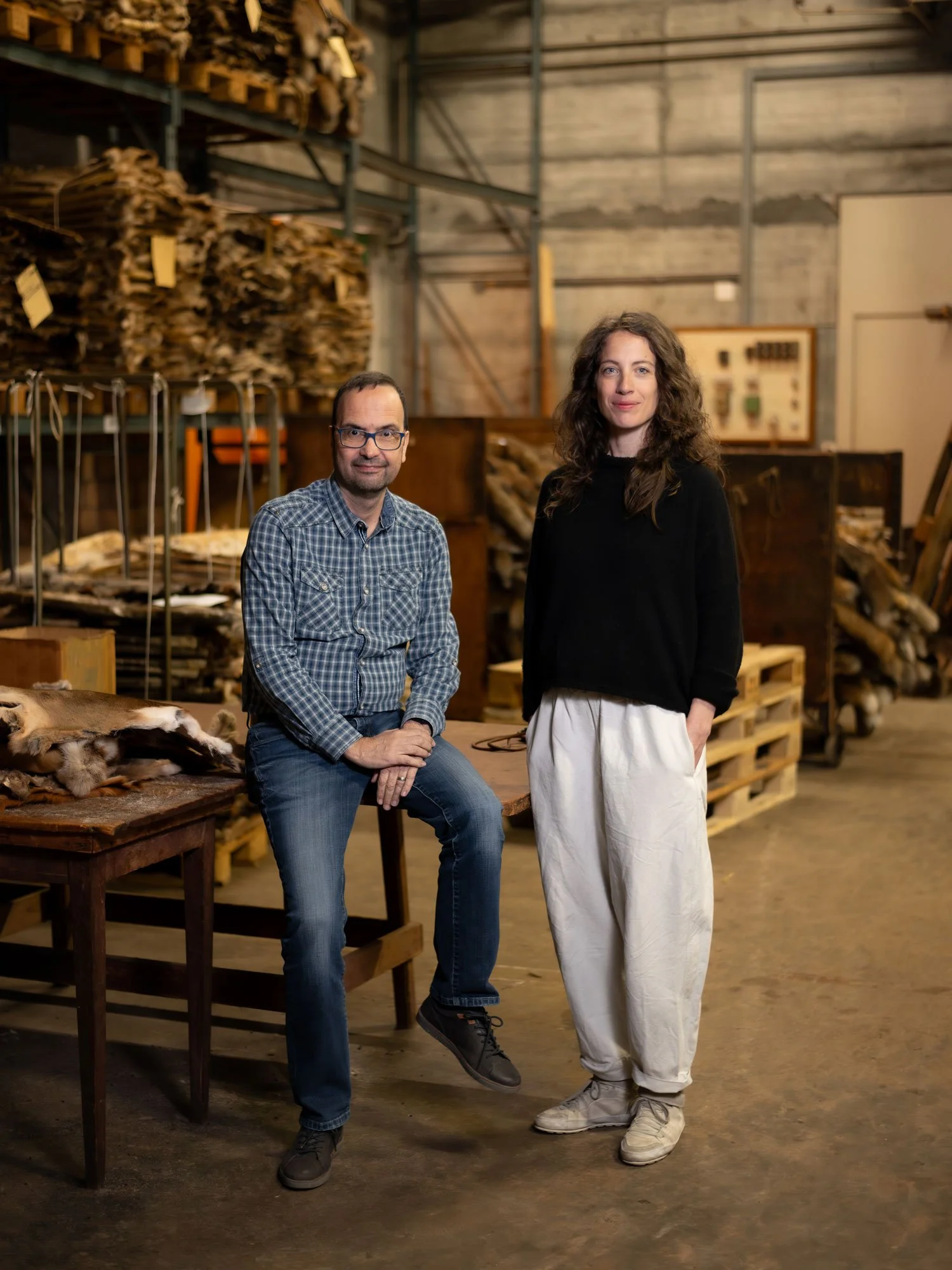
CORII was founded and developed by Nina Conrad. With a background in political science, international law, and ethnology, and years in business development, she entered the leather industry via an unconventional path – and stayed because she recognized the potential of regional, regenerative supply chains. She continues to lead CORII operationally to this day, connecting the project with a broad network spanning agriculture, craft, and design. Nina is co-founder and president of Fibershed DACH, a founding member of the Sustainable Leather Foundation, a member of the Advisory Board of the Regenerative Textiles Initiative by Milkywire, and regularly teaches at universities.
Since summer 2024, CORII has been part of G. Neuenschwander Söhne AG – a family business from the Emmental region with generations of experience in hides and skins. Bernhard and Marc Neuenschwander, the fifth generation, have shifted the company's direction: away from raw hide trading alone, towards processing regional resources into high-quality leather. A natural fit for CORII.