Is “vegetable-tanned” always better?
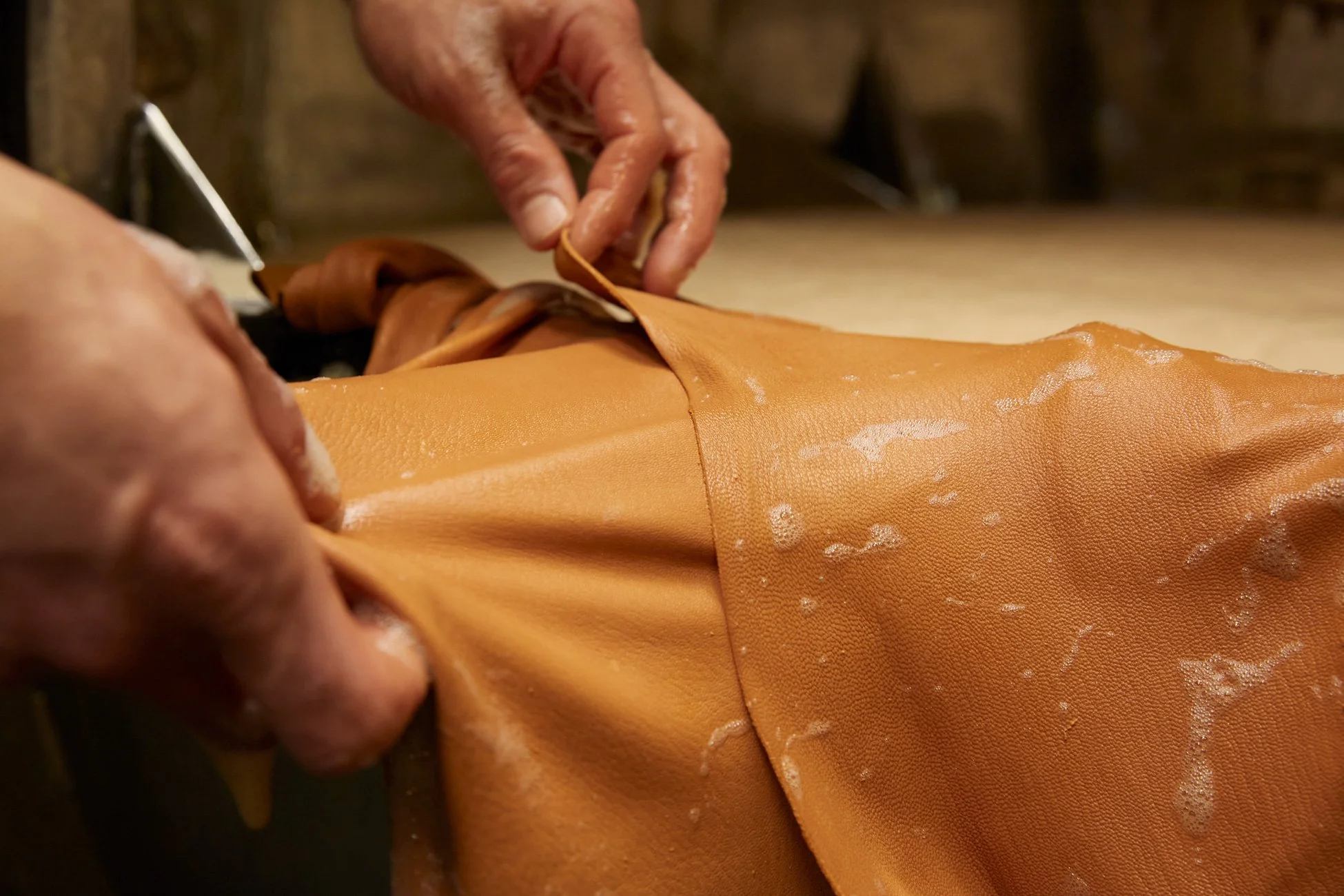
Vegetable-tanned leather is often portrayed as particularly “sustainable.” But the reality is more complex: Tanning is just one step in a long leather-making process—and a single step does not automatically make leather more environmentally friendly or of higher quality.
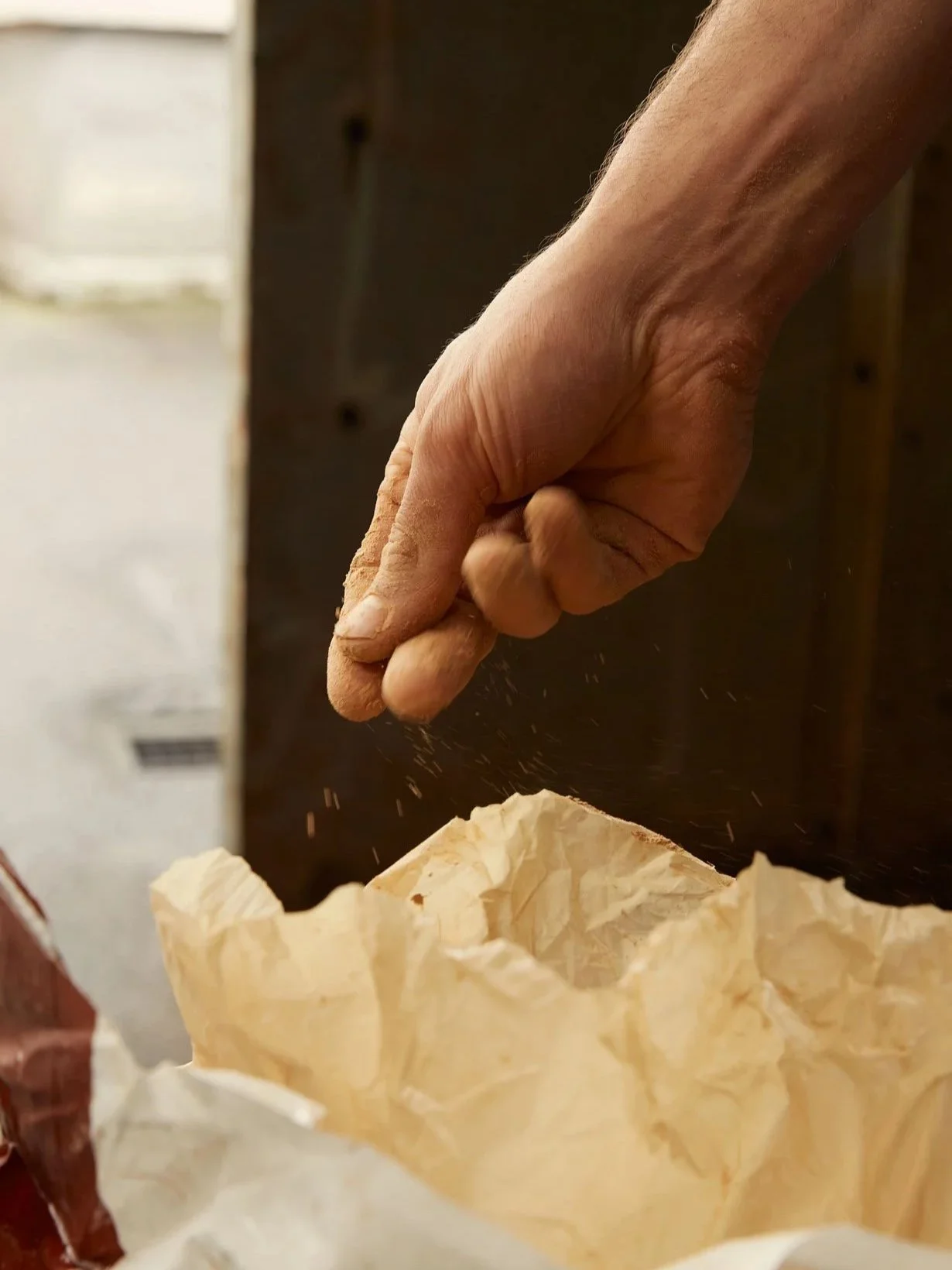
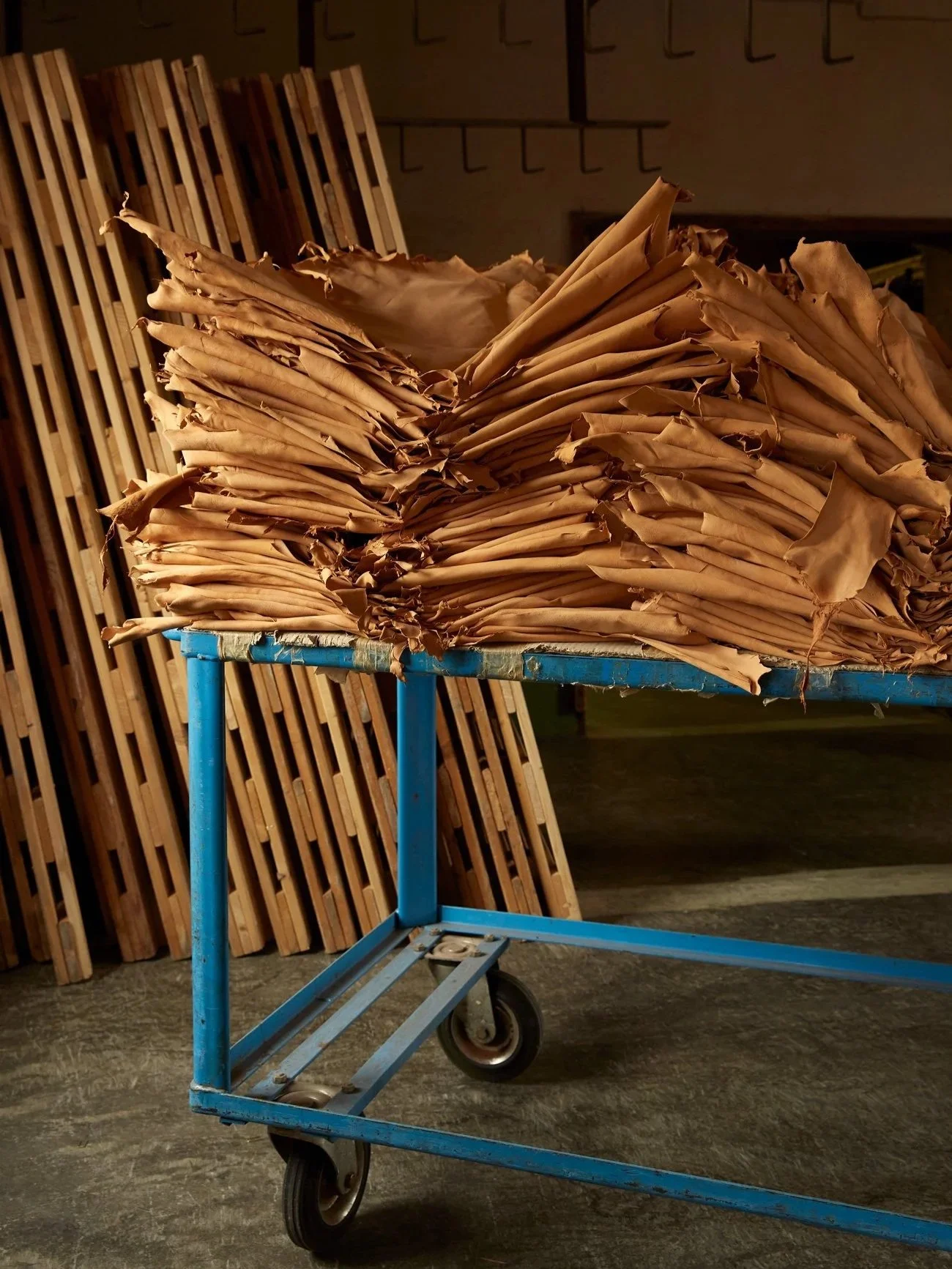
Vegetable tanning agents replace mineral or synthetic agents in this process. They are derived from extracts of wood, tree bark, leaves, or fruits, and their use can offer environmental benefits—provided the raw materials are responsibly sourced, processed, and utilized, and wastewater and energy are carefully managed. Otherwise, the environmental benefit is minimal or nonexistent. Vegetable tanning requires more water, involves longer processing times, and the raw materials are expensive—but the result is a material with a particularly beautiful, rich texture that develops a natural, stunning patina over time.
The choice of tanning agents affects not only environmental impact but also properties such as durability, ease of care, and lightfastness. Vegetable-tanned leather ages visibly, which some see as a plus while others view it as a challenge. Mineral-tanned leather, on the other hand, can be highly lightfast and easy to care for—one is not automatically “better,” nor is the other “worse.”
For us, it’s not the buzzword that matters, but the quality of the ingredients and how they’re used. We consider the entire supply chain: from animal husbandry, to hides and tanning agents, to water and energy use, waste management, and fair working conditions at the tannery. Depending on the product, we select the appropriate tanning method: For our apparel leather, for example, we use a combination of synthetic and vegetable tanning agents. The result is an exceptionally light, fine, and comfortable leather that feels soft against the skin and is a pleasure to wear.