OEKO-TEX® LEATHER STANDARD
What is actually in the leather?
With leather, this question is often difficult to answer. There are many steps between raw hide and the finished material – along with substances that are ultimately invisible in the leather.
For CORII, "Nothing to hide" also means: We want to know the exact details. That is why we had our leather independently tested – according to the OEKO-TEX® LEATHER STANDARD, by TESTEX in Zurich.
The result: Product Class I, the category with the strictest requirements. For us, this is not just another label on the product, but measurable proof. On this page, we show what the standard tests, where its limits lie, and which of our leathers are certified.

WHAT OEKO-TEX® TESTS:
Not the intention, but the material.
This is precisely where the OEKO-TEX® LEATHER STANDARD comes in: not focusing on promises about production, but on the finished leather. In the laboratory, it is tested against a list of more than 1,000 harmful substances—from tanning and dyeing to finishing.
How strict the limit values are depends on the intended use. The more intense the skin contact and the more sensitive the skin, the higher the requirements. The standard also takes into account substances that are not yet or not universally regulated by law, and its limit values are updated at least once a year.
The aspects examined include:

01. Heavy Metals
Chromium VI, lead, nickel and more

02. Process preservatives / Biocides
Substances such as TCMTB, OPP, and other biocides
03. Further Substances
Certain dyes, PFAS/PFCs, plasticizers, solvents, hydrocarbons, and other legally regulated and health-relevant substances
CLASSIFICATION
Is the OEKO-TEX® LEATHER STANDARD a guarantee for "sustainable leather"?
No, and it doesn't need to be. The LEATHER STANDARD is a test for harmful substances, and that is precisely its focus. It does not evaluate the origin of the raw hide, transport, the environmental performance of the tannery, or social conditions along the supply chain.
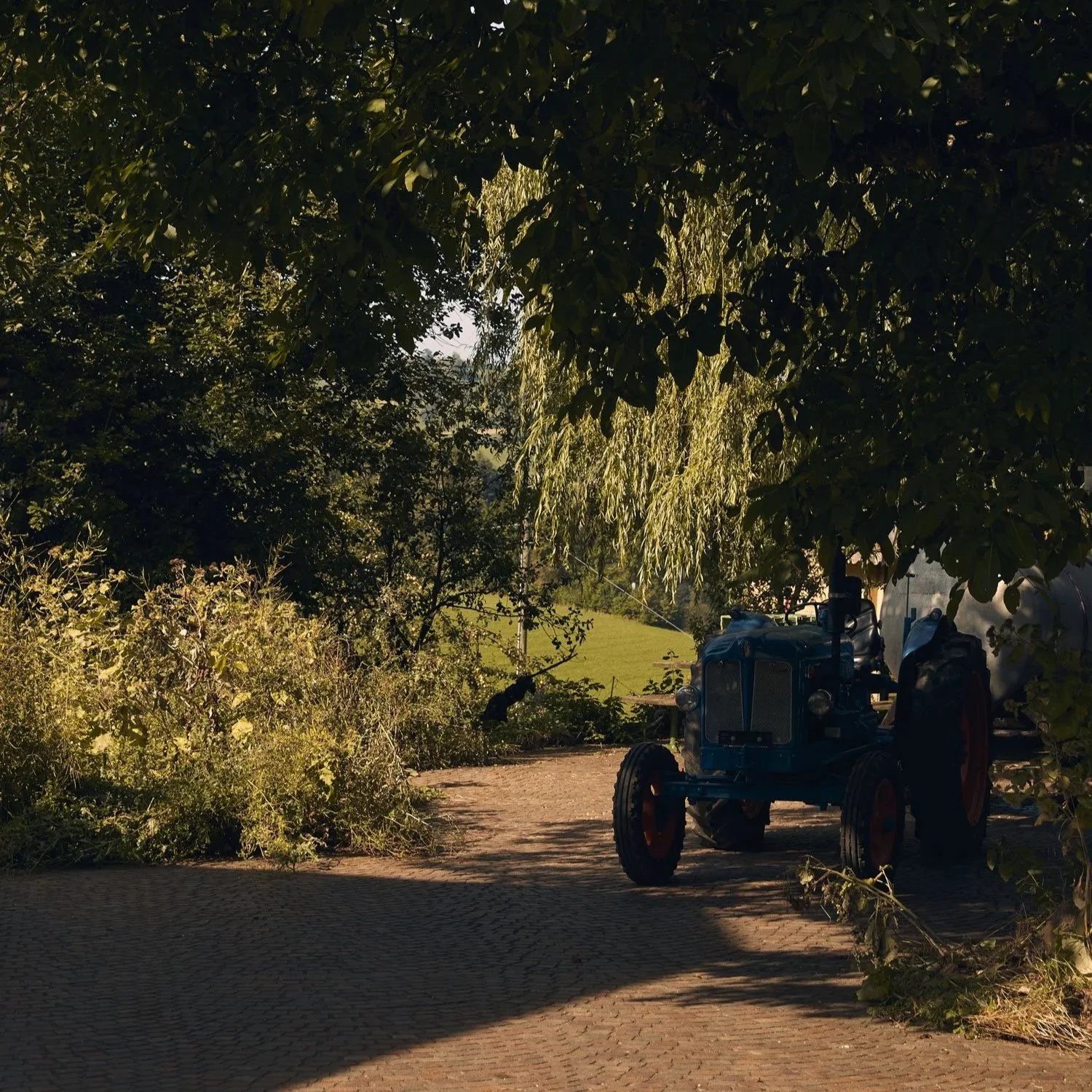
Rather, the OEKO-TEX® LEATHER STANDARD shows what is contained in the finished leather. Where it comes from and how it was produced is a second question – and one that we also want to be able to answer: from the animal that grows up alongside its mother, to the farm that operates regeneratively according to Bio Suisse or Demeter guidelines, to the tannery that uses vegetable tanning agents.
OUR RESULT
Tested to the strictest requirements.
For testing, we sent two of our cowhides to the laboratory: an undyed one in its natural shade and a deep black one. Both meet the requirements of Product Class I.
Product class I is the category for products intended for babies and toddlers up to three years of age – for skin that is particularly sensitive. Consequently, this category enforces the strictest requirements and limit values known to the standard. For us, this is more than just a test result: it shows that leather produced with such great care also excels in laboratory testing. The certificate applies to these exact two types of leather. Anyone working with them holds a material that has been independently tested – and with proof in black and white.
We deliberately selected these two types of leather to represent the two ends of our range: one completely without color, and one with the strongest dyeing. All other leathers are tanned in the same tannery using the same vegetable, chrome-free process. The certificate applies only to the two tested leathers. However, all of them are produced with the same level of care.
INDEPENDENTLY TESTED
TESTEX, Zurich
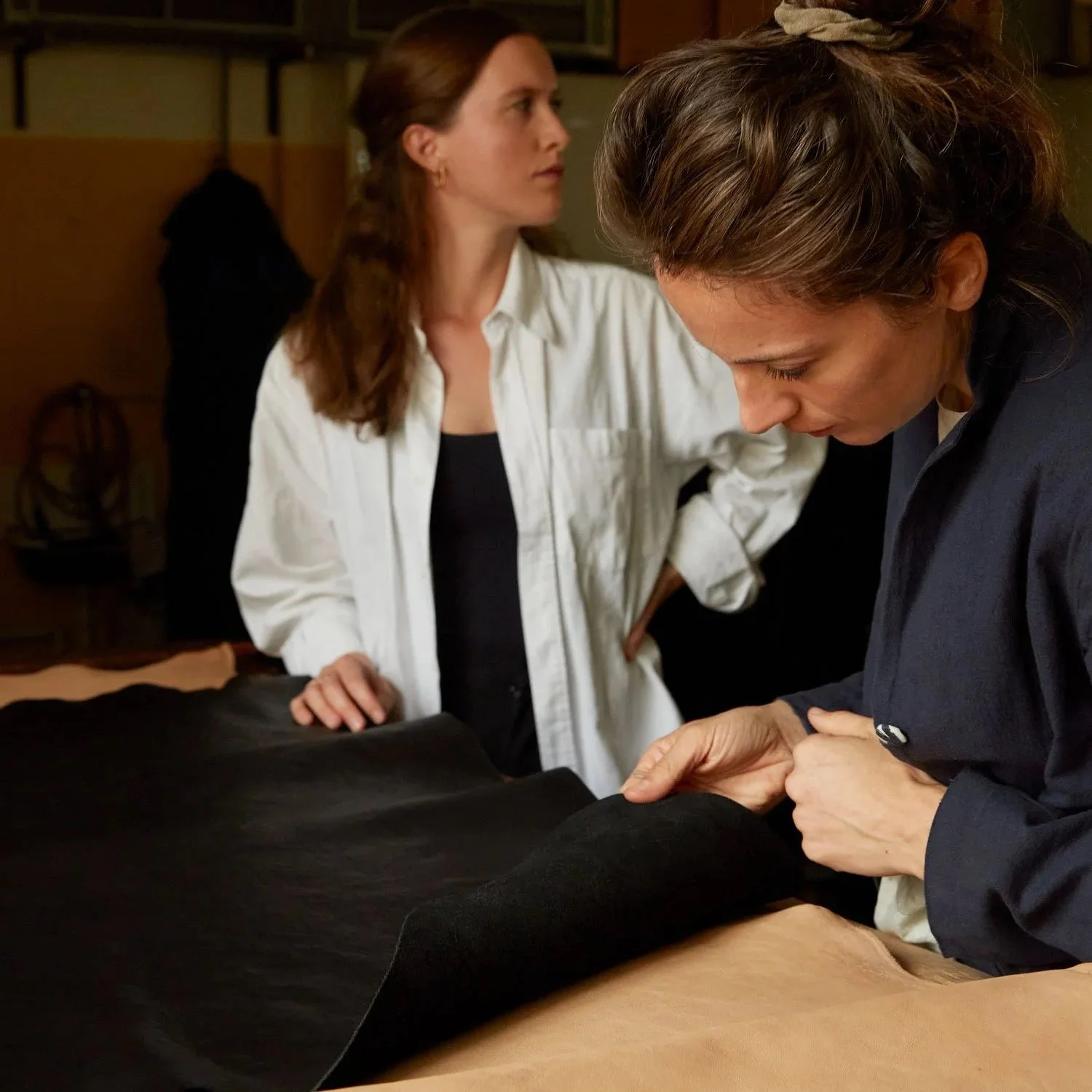
Our leather samples were tested by TESTEX in Zurich, the Swiss OEKO-TEX® testing and certification institute. TESTEX is recognized within the OEKO-TEX® system as an institute for the LEATHER STANDARD. This certification came about as part of a pilot project to which TESTEX invited CORII. For a small company, such certification is not something to be taken for granted. Material testing is complex and costly. This made it all the more important for us to have the opportunity to subject our leather to independent testing, rather than simply claiming ourselves what we believe to be right.

WHAT THIS MEANS FOR CORII
An additional layer of transparency.
Origin, transport routes, tanning, and the use of chemicals are four distinct areas. Each deserves its own clear proof, which is why we communicate them separately. The OEKO-TEX® LEATHER STANDARD complements our work from the farm to the tannery with independent testing of the finished material. The more transparent this is, the better leather can truly be evaluated.

Origin & Husbandry
Our cattle hides come exclusively from suckler cow husbandry in Switzerland.
-
The farms operate according to Bio Suisse or Demeter guidelines, and therefore regeneratively. The hides are a byproduct of food production that has no other use than being processed into leather.
→ More about our raw materials

Tanning
Our leathers are vegetable-tanned, full-grain, and have a natural surface.
-
At the same time, we do not view tanning in isolation: water consumption, energy, wastewater management, and working conditions in the tannery are also part of assessing leather. Our cowhide leathers are vegetable-tanned and chrome-free.

Chemicals
The OEKO-TEX® LEATHER STANDARD serves as an independent test for the finished material.
-
Not as a replacement for transparency, but as part of it. The OEKO-TEX® LEATHER STANDARD certificate goes a step further, testing the finished leather for a wide range of defined chemicals and harmful substances.
WHAT THIS MEANS FOR BRANDS
When material selection is meant to be more than just a data sheet.
When purchasing leather, many questions must be answered at once: Where does the hide come from? How was it processed? Which chemicals were used? What documentation is available? And what can actually be communicated about the material? This is particularly challenging for smaller brands. Not every brand has in-house chemical expertise or the resources to audit the tannery and the material themselves. Tested leather can provide an extra layer of security here.
CORII supports brands with:
→ the selection and sourcing of leather
→ the verification of existing documentation
→ questions regarding tanning and chemical use
→ regulatory requirements and material compliance
Frequently asked questions about OEKO-TEX® certified leather
What does certification mean for your products, and how can you use it? Here, we answer the questions most frequently asked by brands and designers. Is your question missing? Write to us – we'll be happy to help.
-
Discover our OEKO-TEX® certified cowhide leather here:
→ Smooth undyed leather
→ Smooth cowhide leather, black
→ Soft cowhide leather, black
→ Belt leather, black -
The certificate applies to our black and undyed cowhide leathers. We would be happy to discuss with you how to correctly communicate the certification for your product. Send us an email with your inquiry and we will get back to you.
-
Not automatically. The certificate relates to the leather. Other components such as thread, lining, reinforcement materials, or trims are not covered. We are happy to show you what this means for your product.
-
From the perspective of hazardous substance testing: yes. Product Class I has the strictest requirements – even for products that come into close contact with the skin. However, whether a particular leather suits your product also depends on its thickness, feel, and processing. We are happy to advise you.
-
Yes. You can order samples of our black and undyed cowhide directly from us.
→ Smooth undyed leather
→ Smooth cowhide leather, black
→ Soft cowhide leather, black
→ Belt leather, black